Browser farming simulators look intimidating from the outside and are not. Almost all of them are built on the same short sequence, and once you know it, any game in the genre becomes readable within a minute.
The sequence is always the same
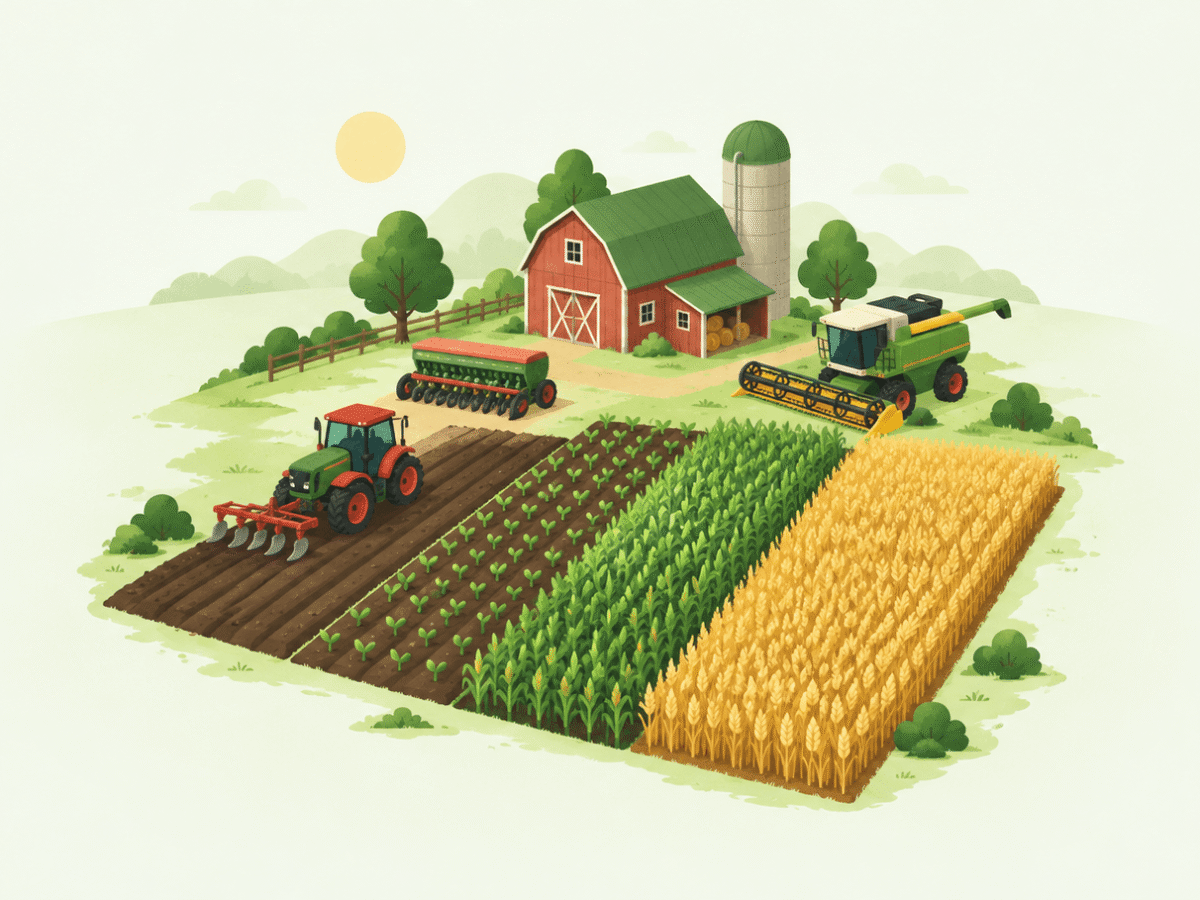
Ground is turned over first. Then it is sown. Then, in the games that model it, it is watered. Then it is harvested, and what comes off it is sold. Games differ in how many of these stages they make you do — some collapse the middle, the stricter ones enforce every step and will simply refuse to let you sow ground you have not ploughed.
If a game seems to be ignoring your input, this is almost always why. You are trying to do step three before step two.
Machinery handles by weight, not by speed
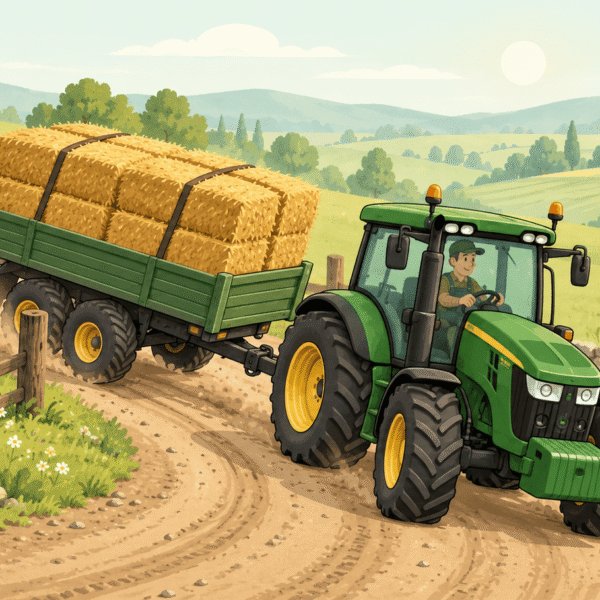
The vehicles in these games are heavy, and the good ones model that honestly. A tractor with a trailer cuts corners tighter than the cab suggests, a chained load swings rather than following, and braking on uneven ground shifts weight at the worst possible moment.
The practical rule: turn earlier than feels necessary, and take descents slower than climbs. Most failed runs are downhill.
Where beginners lose time
Three mistakes account for most of it. Working fields in circles instead of parallel passes, which leaves strips to go back for. Buying more land before automating what you already have, which multiplies the work rather than the income. And selling every harvest immediately in games where prices move, which is the difference between funding your next machine and not.
What to play first
Start with a level-based game rather than an open map — the goal is stated, the ground is bounded, and a restart costs seconds. Once the sequence feels automatic, the open-world titles stop being confusing and start being the point.
Games mentioned in this article
- Solitaire Farm: Seasons — filed under Farm Solitaire & Card Games
- Sheep Farm — filed under Farm Animal Games
- Farming Simulator 2 — filed under Farm Simulation Games
- Farm Triple Match — filed under Farm Solitaire & Card Games
- Farmer Challenge Party — filed under Realistic Farm Games
- Paradise Island 2 — filed under Farm Simulation Games